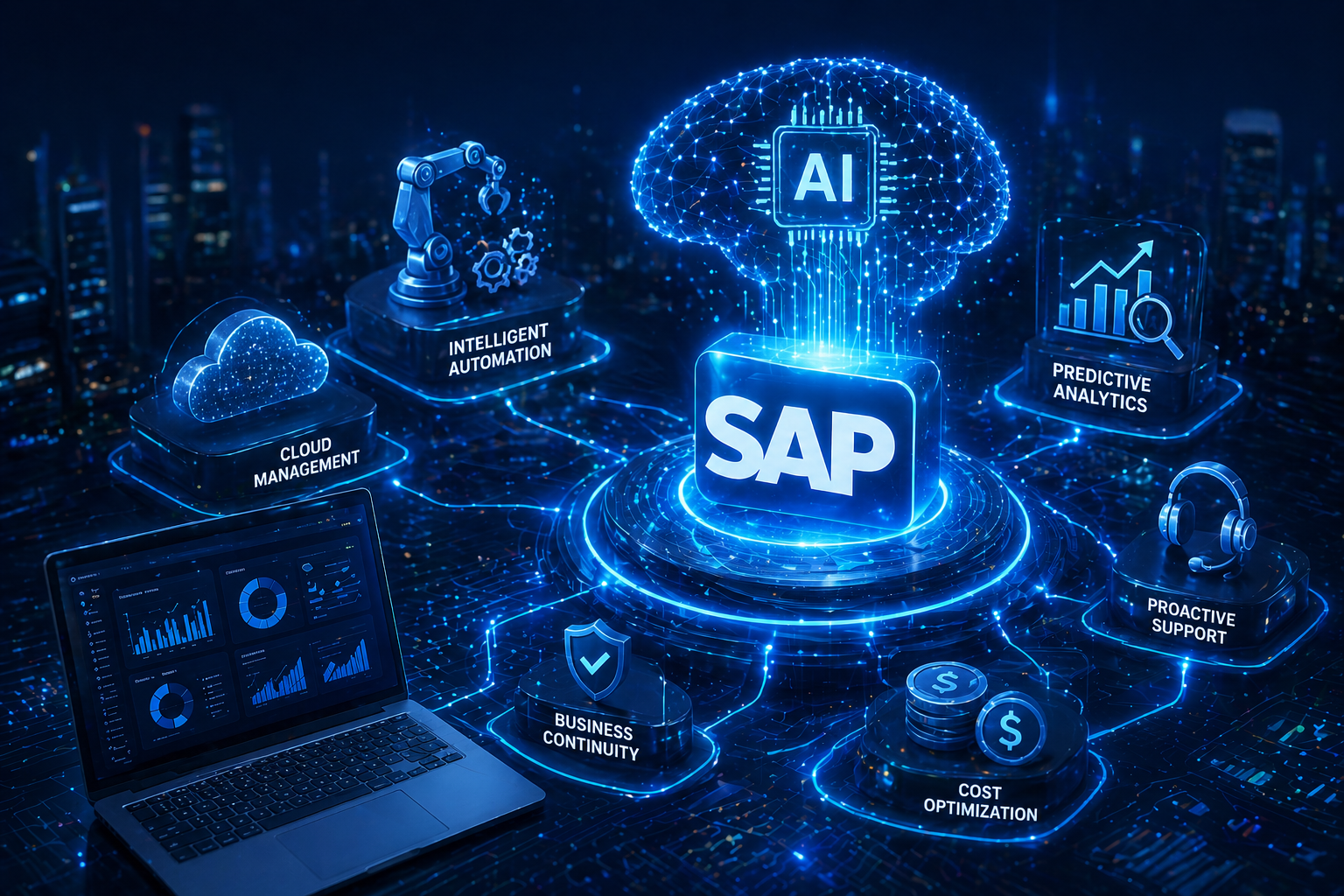
The enterprise technology landscape is rapidly evolving, and a new wave of AI-first managed services is transforming how organizations operate their SAP environments.
In a strategic move, Syntax Systems has introduced an advanced approach to application management by embedding artificial intelligence directly into SAP service delivery models — signaling a shift from traditional support to intelligent operations.
From Reactive Support to Predictive Operations
For years, SAP managed services focused on maintaining system uptime, resolving tickets, and handling upgrades.
But the model is changing.
With AI integration, organizations are now moving toward:
- Predictive issue detection
- Automated system monitoring
- Intelligent workload optimization
- Real-time performance insights
Instead of reacting to problems, businesses can now anticipate and prevent them.
Why This Shift Matters
Enterprise systems like SAP are the backbone of operations — from finance and supply chain to HR and customer experience.
Downtime, inefficiencies, or delays in these systems can directly impact revenue and decision-making.
AI-first managed services aim to:
- Reduce operational risk
- Improve system reliability
- Enhance performance efficiency
- Lower long-term IT costs
This evolution is not just about IT — it’s about business continuity and competitive advantage.
The Role of AI in SAP Transformation
Artificial intelligence is enabling smarter SAP environments by:
Automating Routine Tasks
Reducing manual intervention in system monitoring and maintenance.
Enhancing Data Intelligence
Turning enterprise data into actionable insights for faster decision-making.
Improving Performance Optimization
Identifying bottlenecks and recommending improvements in real time.
Strengthening Security
Detecting anomalies and potential threats before they escalate.
Enterprise Impact: Beyond IT Operations
The impact of AI-driven SAP services extends across business functions:
- Finance: Faster reporting and improved accuracy
- Supply Chain: Smarter forecasting and inventory management
- HR: Streamlined processes and better workforce insights
- Customer Experience: Real-time data-driven engagement
This creates a unified, intelligent enterprise ecosystem.
Industry-Wide Trend: AI + Enterprise Applications
The move toward AI-powered managed services reflects a broader trend across the enterprise technology space.
Organizations are no longer satisfied with:
- basic support
- manual monitoring
- reactive troubleshooting
They are demanding:
- intelligent automation
- predictive analytics
- continuous optimization
This shift is redefining how enterprise applications are managed globally.
Challenges to Consider
While the benefits are clear, adoption comes with challenges:
- Integration with legacy systems
- Data quality and governance issues
- Skill gaps in AI-driven operations
- Change management within organizations
Enterprises must align technology, people, and processes to fully realize the value of AI-first services.
The Road Ahead
AI-driven managed services are not just a trend — they represent the future of enterprise IT.
As organizations continue to invest in digital transformation, the demand for intelligent, scalable, and efficient SAP environments will only grow.
The question is no longer if AI will transform enterprise applications —
but how fast businesses can adapt.
Final Thoughts
The transition from traditional managed services to AI-first operations marks a critical turning point.
It’s about moving from:
support → intelligence
maintenance → optimization
systems → outcomes
Enterprises that embrace this shift early will be better positioned to lead in a data-driven, digital-first world.